

Key Points:
- Prices have stabilized and sales activity is rising, signaling that buyers are returning and confidence is improving.
- Refinancing and lending activity have rebounded, with most lender groups re-engaging as liquidity continues to improve.
- Distress is nearing its peak, and as the market works through it, more capital should free up, supporting a more durable phase of recovery in 2026.
2025 was a transitional year for the commercial real estate (CRE) market and, as we anticipated in last year’s forecast, marked the beginning of a new CRE business cycle. Prices have stabilized, and more distressed assets are finally changing hands as buyers step back into the market. That shift has lifted sales and refinancing activity off their lows. The handoff between cycles is behind us, and momentum is building as we head into 2026. It’s not an ‘all clear’ moment, but it will be a phase where patient, well capitalized investors begin to see real opportunities as distress peaks and then gradually eases.
This piece is a review of the momentum carrying the CRE industry into 2026 and offers our outlook for next year. It also serves as the first installment in a multi-part series examining the contours of the new CRE cycle now emerging.
“Taken together, these five forces point toward a recovery that will gain momentum in 2026.”
Price Stabilization and Rising Sales Volume
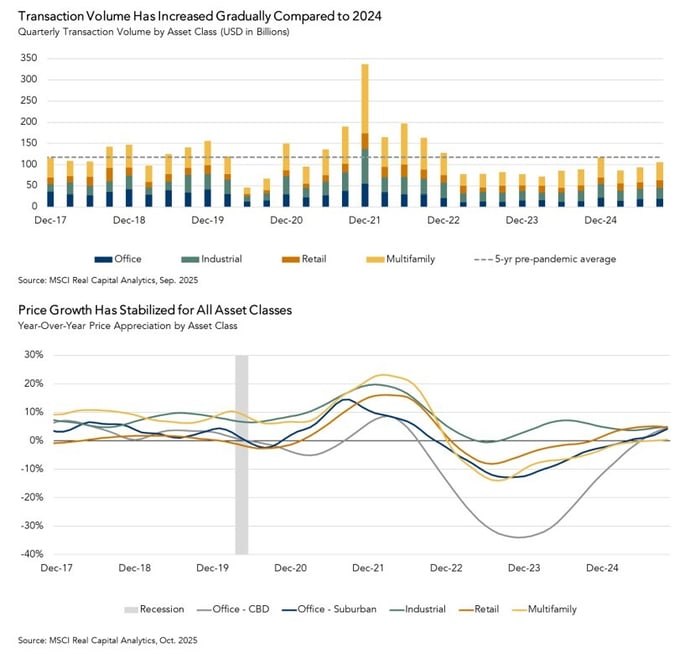
While 2025 wasn’t a breakout year for market activity, it delivered several important turning points that signaled the CRE recovery had taken hold. Property values first stabilized and then posted modest gains, a shift that helped bring buyers back into the market. And, even though sales transaction volume remains below pre‑pandemic norms, it has climbed above 2024 levels – an early, but meaningful sign that purchase demand is returning and that buyers are increasingly willing to transact at prevailing prices.
This dynamic sets the stage for a more active 2026. As prices continue to grow, transaction volume should rise along with them. With greater clarity around pricing and a more confident buyer pool, the market is gradually shifting from a phase of skepticism and cautious optimism toward one defined by broader and more sustained activity.
Refinance Activity Has Turned a Corner
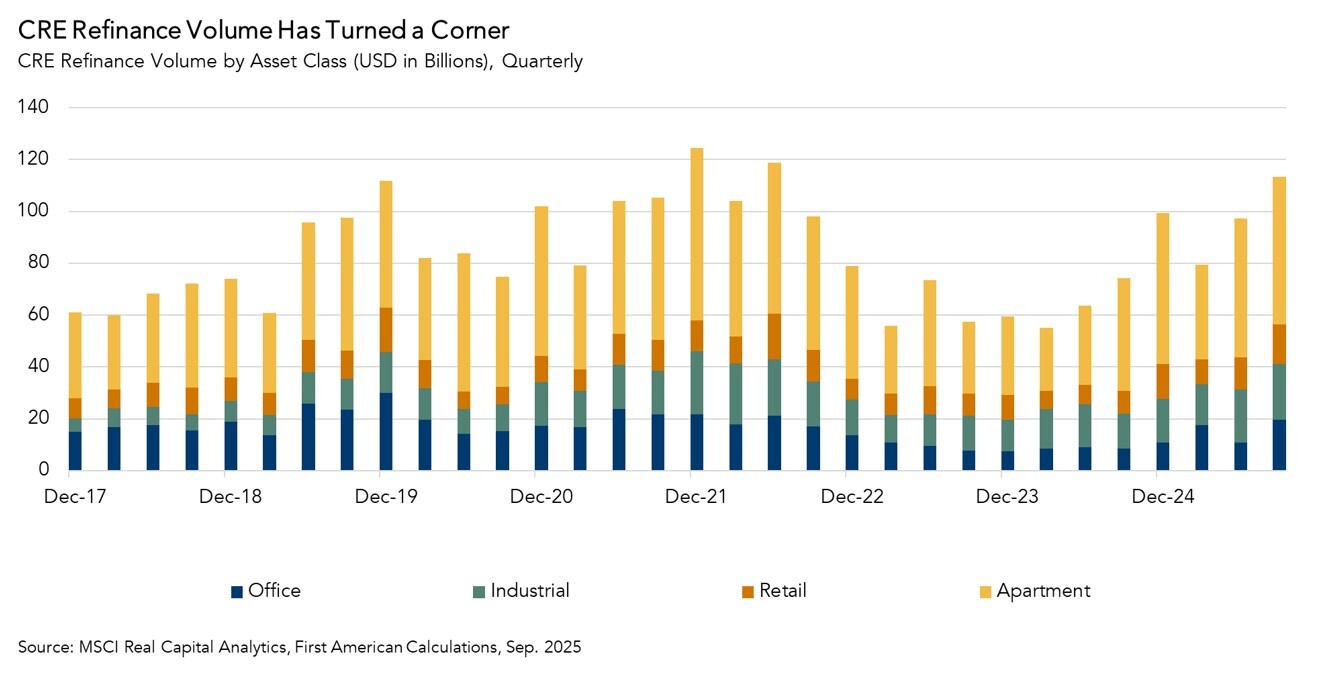
Like sales activity, CRE refinancing activity peaked in 2021 before falling sharply from late 2022 through early 2024. Now, however, it has turned a corner. Quarterly refinance volume more than doubled from a low of $55 billion in the first quarter of 2024 to $114 billion in the third quarter of 2025, returning to levels last observed in 2021 and, previously, in 2019.
Distress Near a Peak
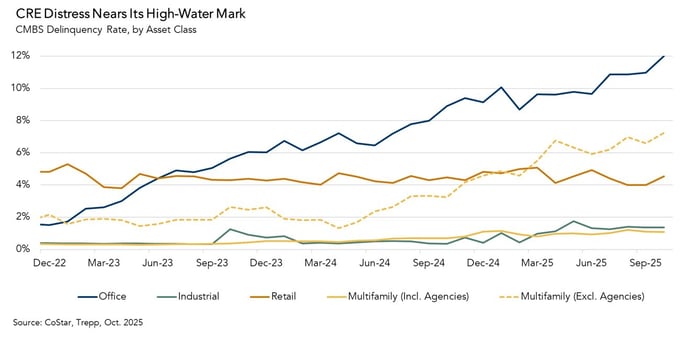
Distress in the CRE market continues to build but is expected to peak in 2026 before gradually receding. The office sector remains under the most intense pressure, with distress now at all time highs, surpassing even the post Global Financial Crisis period. Multifamily is showing strain as well, particularly in private label commercial mortgage-backed securities (CMBS), where delinquency rates have been rising and are likely to climb further as 2021–2022 loans hit maturity.
CMBS delinquencies have increased faster than those in bank or private credit portfolios, largely because CMBS structures make modifications more difficult. Banks and private credit lenders have been more flexible, and restructurings are expected to continue rising in 2026 as more assets struggle with higher debt service costs.
Still, the market is showing its first real signs of clearing: distressed sales have risen modestly as a share of total activity. That’s a healthy development, as it suggests pricing has adjusted enough for more buyers to step in and that distressed properties entering the market are being absorbed, rather than sitting on balance sheets. Extensions will continue for borrowers who can meet their debt service obligations, but a growing share of unresolved cases will convert into recognized distress as the market works through the backlog.
Lenders Re-Engage as Conditions Improve
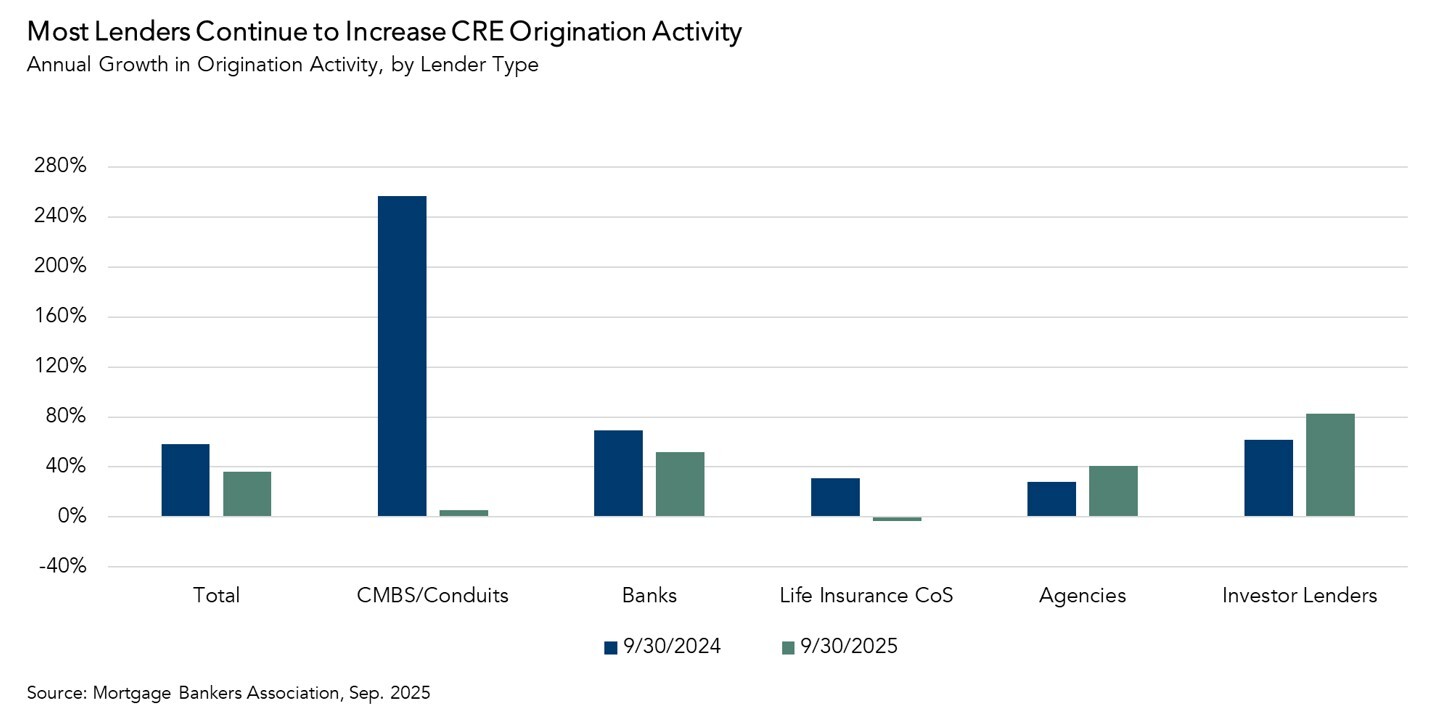
CRE lending continues to regain traction, with most lender groups stepping back into the market and driving origination volume higher. Banks, agencies, and investor lenders all posted solid third quarter gains, while life companies were the lone exception, edging down slightly by 3.5 percent. CMBS issuance cooled from last year’s sharp rebound, but remains well above its late 2022 trough, signaling ongoing improvement in liquidity, even if momentum varies across asset classes. Distress working its way through the system should provide another layer of support: as banks resolve loans that have been tied up in amend-and-extend arrangements, they free up capital that can be redeployed into new lending.
2026: From Stabilization to Acceleration
Taken together, these five forces point toward a recovery that will gain momentum in 2026. Prices have stabilized, refinancing has rebounded, and buyers are returning to the market. At the same time, lenders are gradually expanding their capacity to put new capital to work and, as distress approaches and moves past its peak, additional capital should become available for lending, laying the groundwork for more durable growth.
Stay tuned for the next part of this series, where we’ll look beyond 2026 and explore how this new CRE cycle will diverge from past cycles...and why it may be unlike anything seen in recent living memory.