

Key Points:
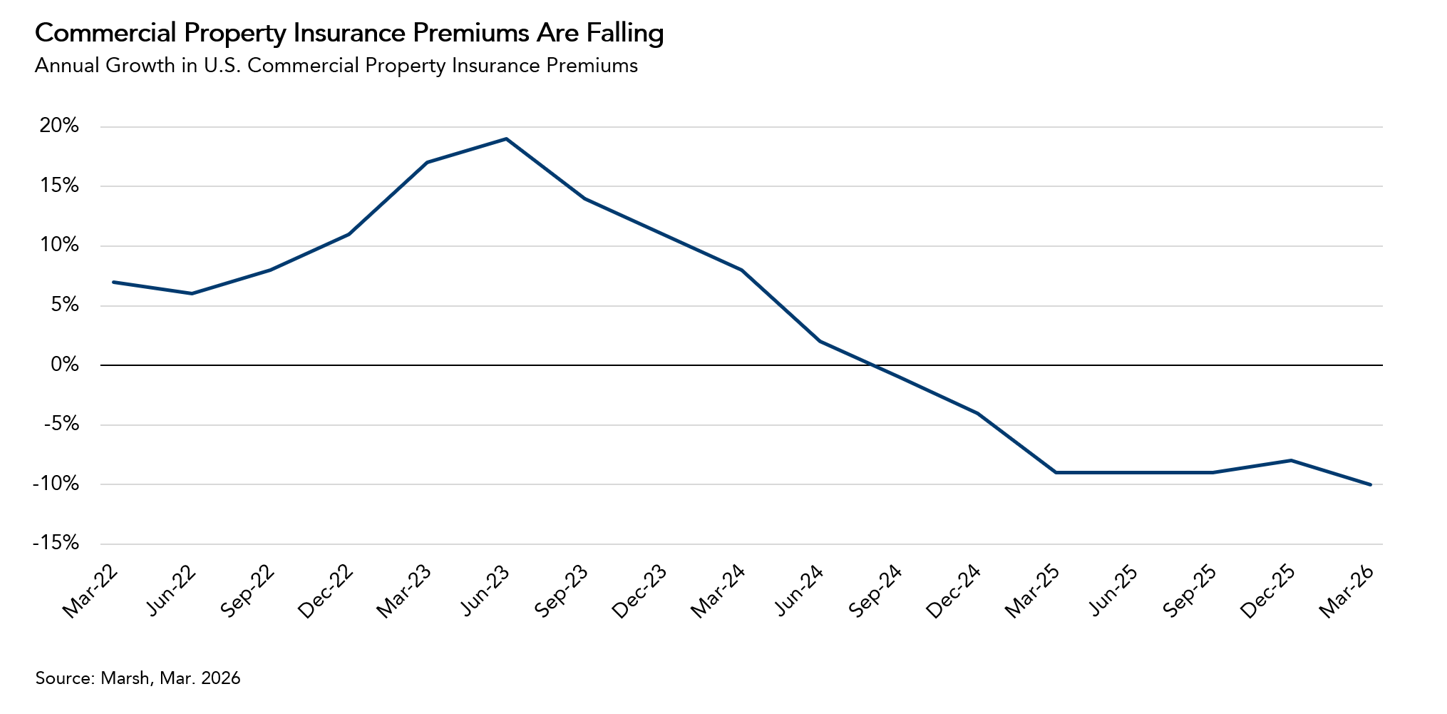
- Annual growth in U.S. commercial property insurance premiums peaked near 20 percent in mid-2023, but began falling in 2025 and as of Q1 2026, premiums have decreased by roughly 10 percent year over year.
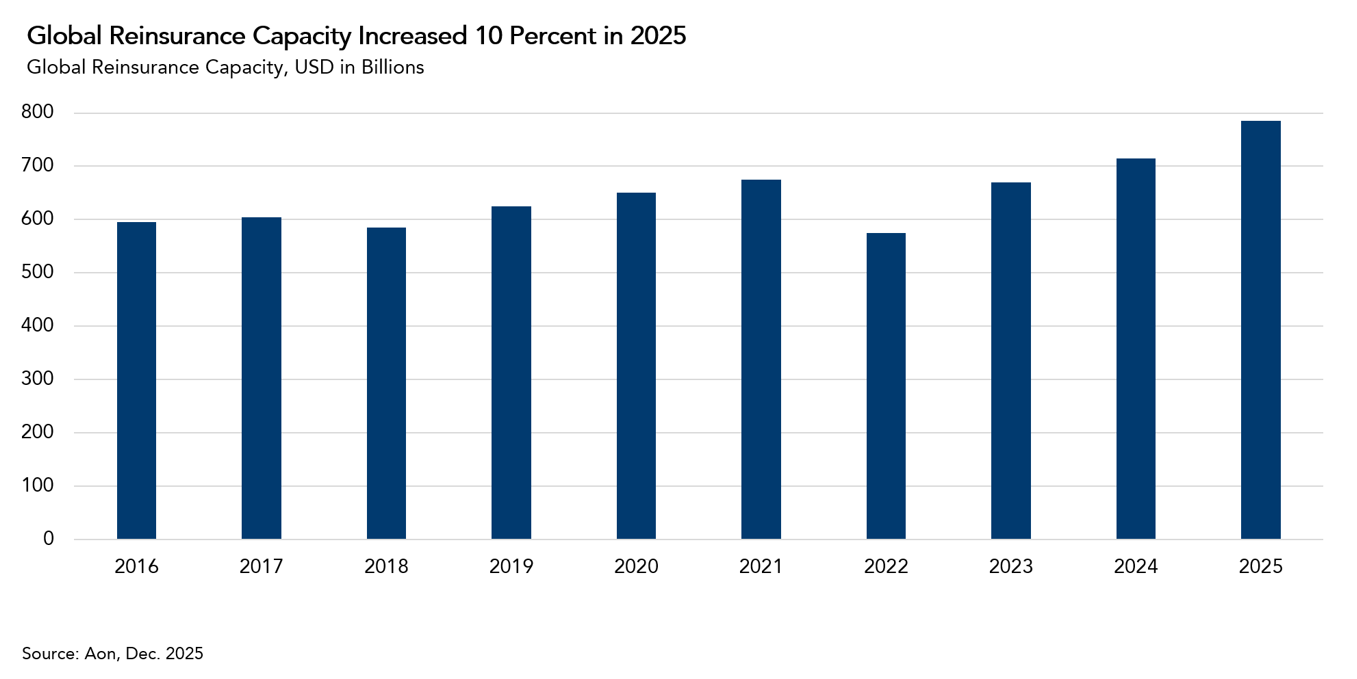
- The decline reflects a 2025 increase in reinsurance capacity after fewer-than-expected catastrophes and strong reinsurer returns.
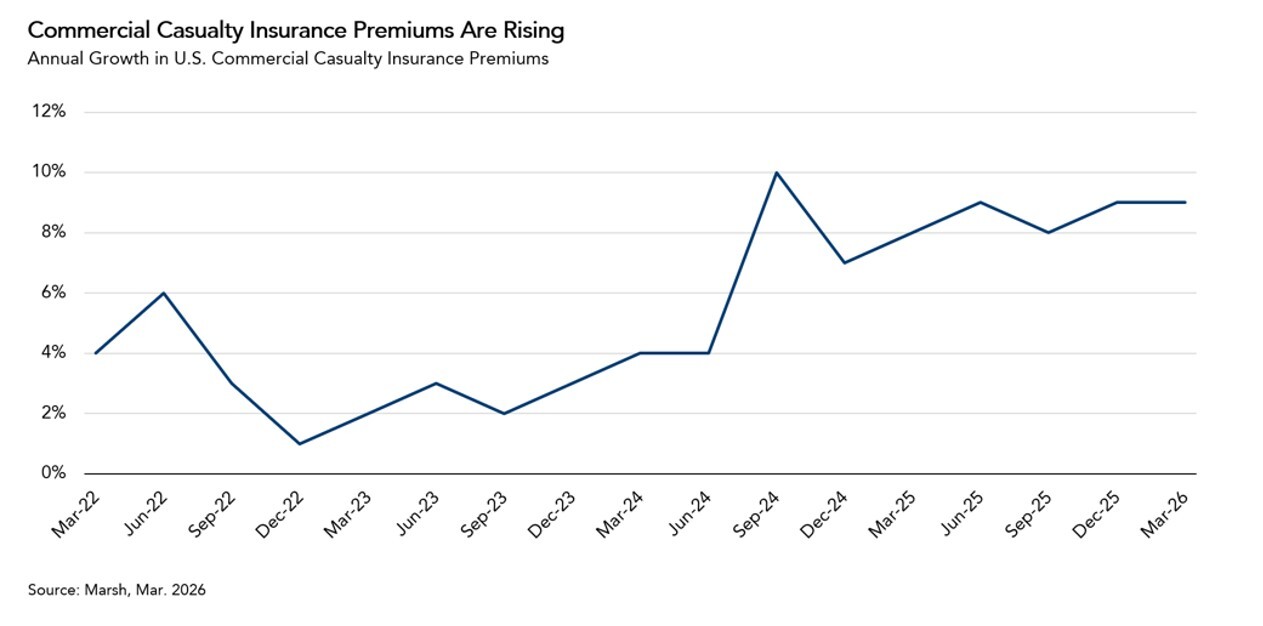
- Casualty premiums remain under pressure from litigation costs, larger jury awards, medical inflation, and social inflation.
In a cycle where income returns will matter more than they have in recent years, forward-thinking operators should always be looking for opportunities to reduce costs wherever they can. Only some operating expenses are meaningfully controllable (property taxes, for example, generally are not), while others can be negotiated or managed depending on market conditions.
Today, commercial property insurance may be one such opportunity, although it is likely to be a temporary one. In this X-Factor, I’ll explain why commercial property insurance premiums decreased in 2025, the cyclical forces that drove that decline, and why it is unlikely to last. I’ll also share why premiums for casualty policies, which insure liabilities related to operating a property rather than physical damages, continue to rise.
“Premiums are falling because reinsurance capital is abundant, not because physical property risk has disappeared.”
Property Insurance Premiums Decline
After several years of painful increases, commercial property insurance is no longer getting more expensive, at least on average. Annual growth in U.S. commercial property insurance premiums peaked at nearly 20 percent in mid-2023, slowed throughout 2024, and began to fall in 2025. By the end of the first quarter of 2026, premiums were down roughly 10 percent year over year.
While not every owner is seeing relief, this is still a meaningful shift. From 2022 to 2024, rising insurance premiums were a major source of net operating income (NOI) margin pressure. By comparison, over the past year insurance premiums have, in some cases, become a tailwind to profitability. What’s causing this decline? Property risk hasn’t disappeared. Rather, it’s a consequence of where in the insurance capital cycle we are – another reason these declines are unlikely to last.
Different Cycles with Unique Timelines
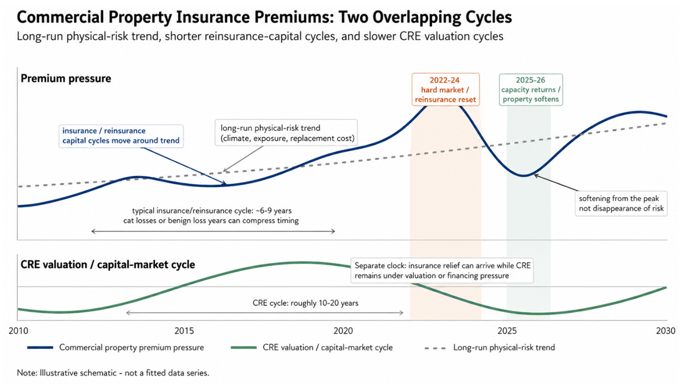
Like commercial property markets, insurance markets operate in cycles, though the drivers of those cycles differ and they unfold over different timelines. Understanding why today’s relief is likely temporary requires looking at the insurance cycle itself.
For property insurance markets, the long-run backdrop is still rising climate-related physical risk. NOAA’s inflation-adjusted billion-dollar disaster data shows that severe weather and climate events have become more frequent and costly over time. Insurance premiums, however, do not necessarily move in a straight line with that trend. Instead, they oscillate around it, as reinsurance capital becomes relatively more scarce or abundant. Reinsurance is the insurance that primary and regional insurers purchase to protect themselves against very large property losses. “Capacity” refers to the amount of capital available to absorb that risk.
Research on property-casualty underwriting cycles suggests that property insurance capital cycles typically last six to nine years, although major catastrophe years can shorten or disrupt that timing. Following the 2022 to 2024 market reset, reinsurers raised prices and tightened terms, shifting more catastrophe risk back to primary insurers and policyholders. This pushed property premiums higher. That tight market also boosted reinsurer returns, while lower-than-expected losses during the 2025 hurricane season left more capital available to deploy this year.
As that capital competes for property catastrophe risk, reinsurance becomes less expensive and more readily available, allowing primary insurers to compete more aggressively for commercial property accounts. In CRE terms, this means insurance relief can arrive, even while valuations remain under pressure from higher interest rates, weaker financing conditions, or slower transaction markets. Insurance markets are cyclical, the underlying property risk is not. Property premiums can fall for cyclical capital-market reasons, even as the long-run climate-risk trend continues to point higher. Taken together, this suggests that the recent relief from falling property insurance premiums should be viewed as cyclical and near-term, rather than structural or long-lasting.
Rising Reinsurance Capacity
Why have property insurance premiums started falling? In short, because more reinsurance capacity is available. Reinsurance capacity increased meaningfully in 2025, by 10 percent, due to a combination of two factors. First, fewer-than-expected severe catastrophe events in the second half of 2025 allowed many reinsurers to retain more capital than expected. Second, the tight insurance market of 2022 to 2024, during which reinsurance capital pulled back after several years of large losses, meant primary insurers were unable to offload as much risk as they had previously. The result is an abundance of capital eager to compete for the higher returns currently available, allowing primary insurers to transfer more risk and compete more aggressively for business through lower premiums.
Casualty Insurance is Still Moving the Other Way
When most operators insure a building, they purchase both property and casualty insurance (P&C insurance). Property insurance covers physical damage to the building. Casualty insurance covers liabilities related to operating the property, including slip-and-fall claims, negligent security, premises liability, and a host of other potential issues.
Unlike property premiums, casualty premiums are still rising. Annual growth in U.S. commercial casualty insurance premiums has remained near 8 to 9 percent since late 2024. The reason is that casualty losses are driven less by weather and reinsurance capacity and more by legal outcomes: litigation costs, larger jury awards, medical inflation, and uncertainty surrounding how claims ultimately settle. These pressures, often grouped under the term “social inflation,” have continued to build. So, even as additional reinsurance capital helps property insurance markets soften, casualty insurance remains a separate source of expense pressure for CRE owners.
CRE Owners: Act Now
Lower property insurance premiums present a near-term opportunity for CRE owners and operators to reduce operating expenses. But don’t assume that they will last. Premiums are falling because reinsurance capital is abundant, not because physical property risk has disappeared. A few severe catastrophe seasons could quickly push reinsurers back into a defensive posture, reducing underwriting limits and overall capacity, which would place renewed upward pressure on premiums. That makes today’s market an opportunity to reduce one operating expense while owners have greater negotiating leverage with their property insurance provider.
Property premiums may be benefiting from a more abundant reinsurance market, but casualty premiums remain under pressure from litigation costs, larger claims, and other legal trends. For operators focused on protecting net operating income NOI, the best approach is to capture savings while market conditions allow, and continuing to plan for insurance costs to remain a long-term source of volatility.