.png?width=2560&height=1440&name=Blog_Hero_Image_Property_blog%20(1).png)
As America marks its 250th birthday, it's worth remembering that the story of this country has always been, in part, a story of property, of homes built, estates passed down, and dreams put down in brick and stone. For more than 135 years, First American has helped bring certainty to that story, protecting the ownership rights that turn a building into a legacy.
Behind every iconic American property is a question worth pausing on: who actually owns this place? It's the kind of thing you wonder about on a tour or watching a documentary, and the answers are often more surprising than the buildings themselves. Almost every one of them comes down to a chain of ownership, carefully recorded and protected over generations with the help of a title company.
As part of America’s 250-year celebration, here are ten of the country's most beloved landmarks and the ownership stories behind them:
Disneyland in Anaheim, California
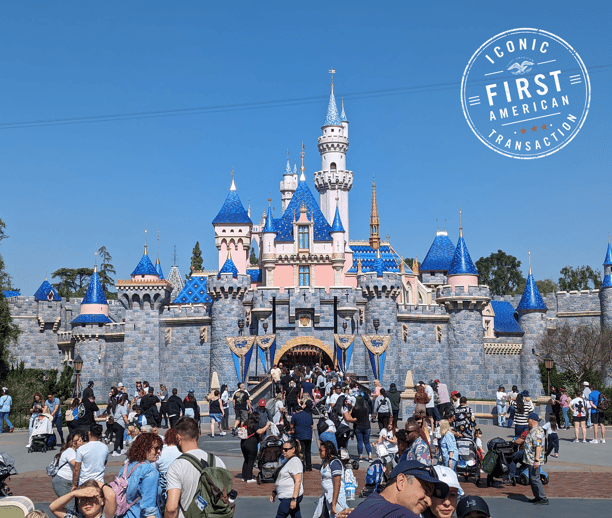
Image source: By Parksfan1955, https://commons.wikimedia.org/w/index.php?curid=156900791
When Disneyland opened in Anaheim, California, on July 17, 1955, Walt Disney had transformed roughly 160 acres of orange groves into "the happiest place on earth." Generations later, the magic hasn't faded and behind it sits a simple question with a tidy answer: who owns Disneyland?
It belongs to The Walt Disney Company, the entertainment empire Walt built. But the story underneath is pure real estate. Before there was a castle or a single ride, there was land — orange groves that had to be bought, parcel by parcel, and assembled into the footprint of a dream.
Every great vision starts with securing the ground it stands on. Even the happiest place on earth began with a property transaction and a clear title to build on.
The Empire State Building in New York City, New York
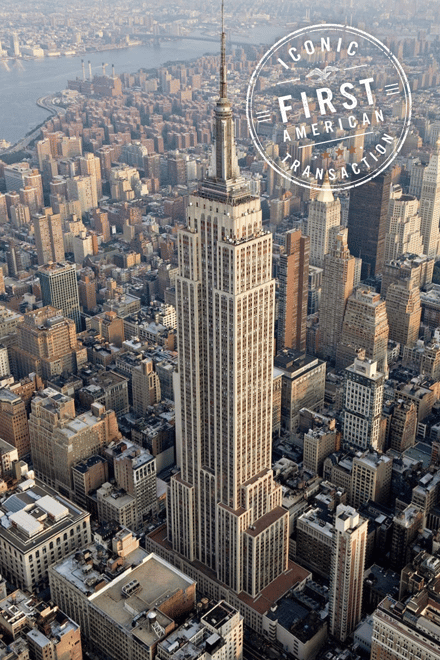
Image source: Sam Valadi, https://www.flickr.com/photos/132084522@N05/17339180506
The Empire State Building rose in just 410 days and opened on May 1, 1931, in the depths of the Great Depression. It would remain the tallest building in the world for 40 years. Financed by John J. Raskob with former New York Governor Al Smith as its public face, it became the very symbol of American ambition.
But here's what makes it a perfect property story: who owns the Empire State Building is a question with a long and tangled answer. Over the decades it was bought, sold, syndicated, leased back, and fought over in headline-making disputes between investors. Today it's owned by Empire State Realty Trust, which took the building public in 2013.
Few buildings have changed hands as often, or as dramatically. Every one of those deals — through booms, busts, and bitter ownership fights — depended on establishing exactly who held the title. It's a towering reminder that behind even the most famous skyline in the world is the essential work of getting ownership right.
Biltmore Estate in Asheville, North Carolina
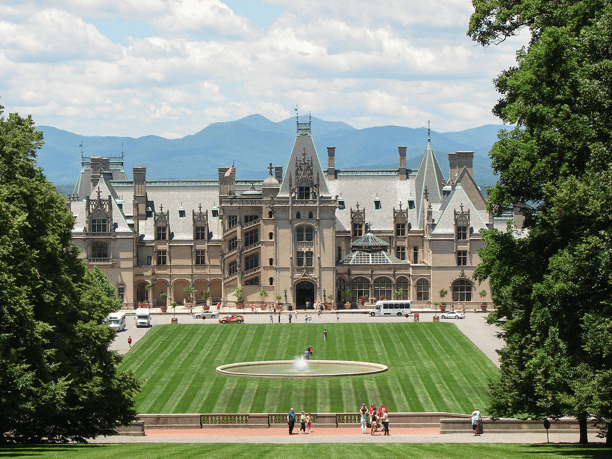
Image Source: 24dupontchevy, https://commons.wikimedia.org/w/index.php?curid=51735781
If you've ever wondered who owns the Biltmore Estate, here's the remarkable answer: the same family that built it. Completed in 1895 in Asheville, North Carolina, Biltmore was the dream of George Washington Vanderbilt II, designed by architect Richard Morris Hunt with grounds laid out by Frederick Law Olmsted. At roughly 178,000 square feet and 250 rooms, it remains the largest privately owned home in the United States.
More than 130 years later, Biltmore is still owned by Vanderbilt descendants, the Cecil family, who run it as a private company. That continuity is extraordinarily rare. Most great estates are eventually broken up, sold off, or handed to nonprofits; Biltmore has stayed in the family across five generations.
Keeping a property intact and in family hands for that long is no accident. It takes a meticulous stewardship of the title passed carefully from one generation to the next. It's the difference between a house and a legacy.
The Breakers in Newport, Rhode Island
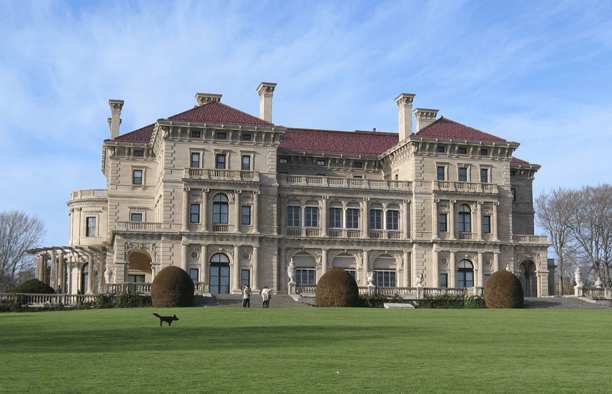
Image Source: Itub, https://commons.wikimedia.org/w/index.php?curid=117288593
In Newport, Rhode Island, the Gilded Age's grandest "summer cottages" still line the cliffs and the crown jewel is The Breakers, the 70-room Italian Renaissance–style palace built between 1893 and 1895 for Cornelius Vanderbilt II, grandson of the family's founder. The question of who owns it today comes with a lovely wrinkle.
The Breakers is owned by the Preservation Society of Newport County, which first leased the mansion in 1948 and later purchased it. For decades, though, Vanderbilt descendants continued to live on the upper floors — a rare arrangement where the family who built the home stayed on long after it became a museum.
That blend of public stewardship and private legacy is only possible with carefully structured ownership — a reminder that even the grandest homes rest on the same foundation as any other: a clear and certain title.
Fallingwater in Mill Run, Pennsylvania
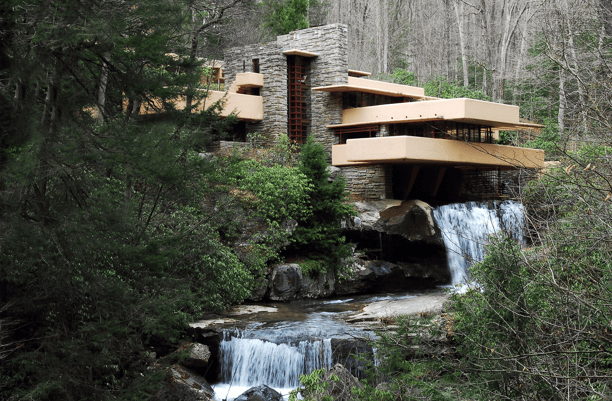
Image source: lachrimae72, https://pixabay.com/photos/house-in-nature-house-falling-water-2110133/
Cantilevered over a waterfall in the Pennsylvania woods, Fallingwater is widely considered the masterpiece of Frank Lloyd Wright and one of the most beautiful homes ever built in America. Designed and built between 1935 and 1939, it was commissioned by the Kaufmann family, owners of a Pittsburgh department store, as a weekend retreat.
It stayed in the Kaufmann family until 1963, when Edgar Kaufmann Jr. entrusted the house to the Western Pennsylvania Conservancy, which has preserved it ever since.
Fallingwater is a property defined by vision. But, like every home, its story still runs through ownership. The Kaufmanns' decision to hand it to a conservancy, rather than sell it off, is what ensured Wright's masterpiece would belong to everyone. A clean transfer of title is what made that gift to the public permanent.
Marble House in Newport, Rhode Island
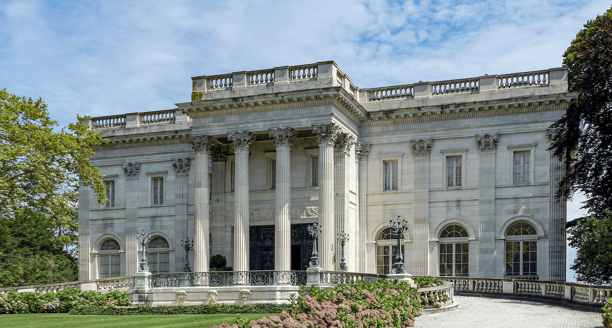
Image Source: dchelyadnik@yahoo.com, https://www.flickr.com/photos/53647116@N05/3724634644
Back in Newport stands another Vanderbilt jewel: Marble House, one of the most dazzling of the Gilded Age "cottages." Built between 1888 and 1892 for William K. Vanderbilt as a gift to his wife, Alva, the home used 500,000 cubic feet of marble and helped transform Newport into the playground of America's wealthiest families.
So, who owns Marble House now? Like several of its Newport neighbors, it's preserved and operated by the Preservation Society of Newport County, which acquired it in the 1960s and opened it to the public.
Marble House is a clear example of a property's journey from private opulence to public treasure, a handoff that only works when ownership is transferred cleanly, and the title is sound.
The Greenbrier in White Sulphur Springs,
West Virginia
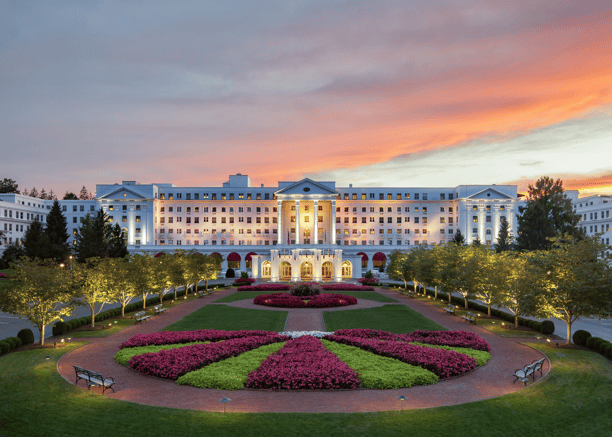
Image Source: West Virginia Tourism
Tucked into the mountains of White Sulphur Springs, West Virginia, The Greenbrier has welcomed guests since 1778 and presidents by the dozens. But the question that draws the most curiosity isn't about the golf or the grandeur; it's about the secret Cold War bunker hidden beneath it.
For 30 years, a massive fallout shelter built to house the entire U.S. Congress sat concealed under the resort's West Virginia Wing, its existence a closely guarded secret until it was revealed in 1992. It's one of the great hidden chapters of American history.
As for who owns The Greenbrier, the resort's ownership has changed hands more than once. It was held for decades by the Chesapeake & Ohio Railway, moved through bankruptcy, and was purchased by businessman Jim Justice in 2009. Each of those transitions was a major commercial transaction, the kind where clear title and ownership certainty aren't a nicety, they're essential to the deal going through at all.
Southfork Ranch in Parker, Texas
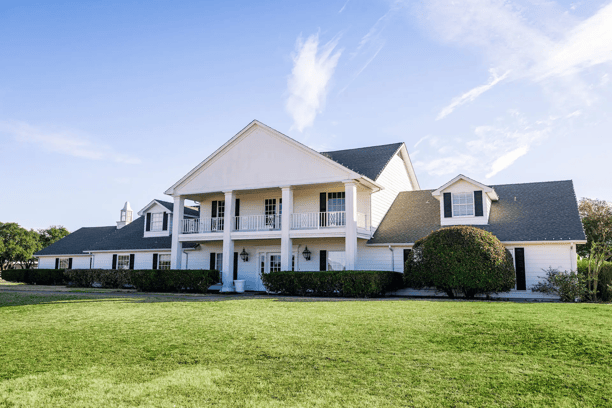
Image Source: Southfork.com
Then there's a property famous for being two things at once. Southfork Ranch in Parker, Texas, was the fictional home of the Ewing family on the hit TV show Dallas. But is Southfork Ranch a real place? It absolutely is. The cameras filmed a genuine working ranch, and fans have been visiting ever since.
Originally a privately owned ranch, Southfork is today a real, commercially operated event venue and conference center that hosts weddings and gatherings against that instantly recognizable backdrop.
It's a property where fiction and reality blur, but where the ownership is very real. Behind the TV legend is an actual deed, an actual title, and an actual chain of owners — the same true-life paperwork that stands behind every property in America, famous or not.
Hearst Castle in San Simeon, California
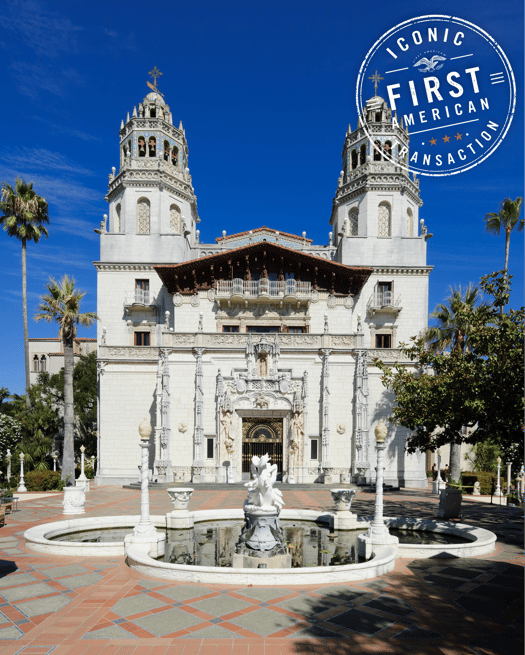
Image Source: King of Hearts, https://commons.wikimedia.org/w/index.php?curid=21785132
High on a hill above San Simeon, California, Hearst Castle is the spectacular creation of newspaper magnate William Randolph Hearst and pioneering architect Julia Morgan, built across nearly three decades from 1919 to 1947. Of its whole sprawling history, the part that fascinates most is how it left private hands, and why it was given to California.
In 1958, the Hearst Corporation gave the estate to the State of California, which has operated it as a state park and National Historic Landmark ever since. That gift was, at its heart, a property transfer, and one of the most generous in American history.
Whether a property changes hands through a sale or a gift, the same thing has to be true: the ownership has to be clear, and the transfer has to be certain. That certainty is what allows a private estate to become a public treasure that millions can visit.
Graceland in Memphis, Tennessee
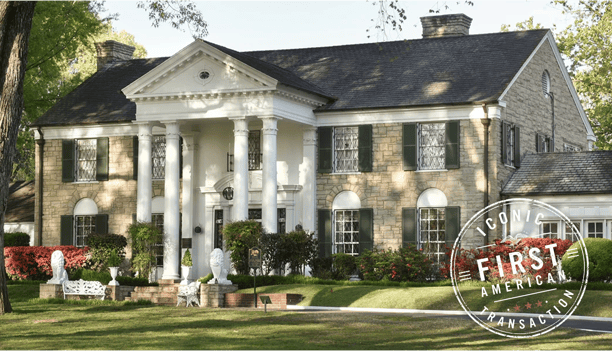
Image Source: Graceland.com
In 1957, a 22-year-old Elvis Presley paid around $102,500 for a Memphis mansion named Graceland and turned it into the most famous home in American music. It's no surprise that the question of who owns Graceland today is one people have never stopped asking.
The home was originally built in 1939 and named after the original owner's relative, Grace. Elvis bought it at the dawn of his fame, and after his death in 1977, his family opened it to the public in 1982. Today Graceland remains held by the Presley family estate, passed down through the generations from Elvis to his daughter Lisa Marie, and on to her heirs.
Graceland is a textbook ownership story: a clear chain of title running from one owner to the next, decade after decade. It's exactly the kind of continuity that careful title protection makes possible — keeping a family's legacy intact long after the keys first changed hands.
A Nation Built on Ownership
From a founding father's estate to a king of rock and roll's mansion, from Gilded Age palaces to the happiest place on earth, these ten properties trace the arc of the American story. What they share isn't just fame; it's that each one represents something deeply American: the right to own, to build, to pass down, and to be certain that what's yours is truly yours.
That certainty is what First American has helped protect for more than 135 years. The work of a title company rarely crosses your mind as you tour a historic home, but it's the quiet safeguard that helps secure ownership, whether the property is a national landmark or the first home a family ever calls their own.
As America celebrates 250 years, we're proud to celebrate the property owners — past, present, and future — who've shaped this country one home at a time.